
Landfill and Compost Odour Monitoring Saudi Arabia
Saudi Odour Monitoring provides odour monitoring for landfill and composting sites in Saudi Arabia, serving landfill, transfer-station, material-recovery and compost operators, building an operational evidence chain around sources, weather, complaints and control performance. Waste-site odour is rarely one uniform plume from one fixed point: active tipping, exposed waste, leachate, gas wells, flares, transfer operations, composting stages and vehicle movements create different event patterns.
You receive a written proposal setting out the monitoring plan, equipment, scope, lead time and price. Request a quotation
The service is diagnostic: it supports source prioritisation and response planning. Licensing, landfill engineering, closure design and formal regulatory studies remain separate scopes, and the monitoring does not replace the permit, approved method or regulatory decision that applies to your project.
Map sources by activity and condition
Begin with the site layout and operating sequence. At a landfill, potential investigation areas include the active face, daily cover, older cells, gas wells and headers, leachate collection or storage, flare compounds, condensate points and waste reception. Transfer stations add bays, compactors and vehicle queues. Composting facilities need stage-specific mapping for feedstock reception, mixing, active processing, turning, curing, screening, storage and leachate.
The US EPA explains that landfill gas is produced as organic material decomposes and is composed mainly of methane and carbon dioxide with a smaller non-methane-organic-compound fraction. Odour diagnosis should not turn that general composition into a default sensor list. Methane safety, H2S or other odorous gases, VOC indicators and sensory observations serve different questions and may require different instruments.
For a dedicated system route, see landfill, compost and waste-facility odour monitoring. Site licensing, engineered gas collection and closure requirements are handled through the responsible waste and regulatory teams.
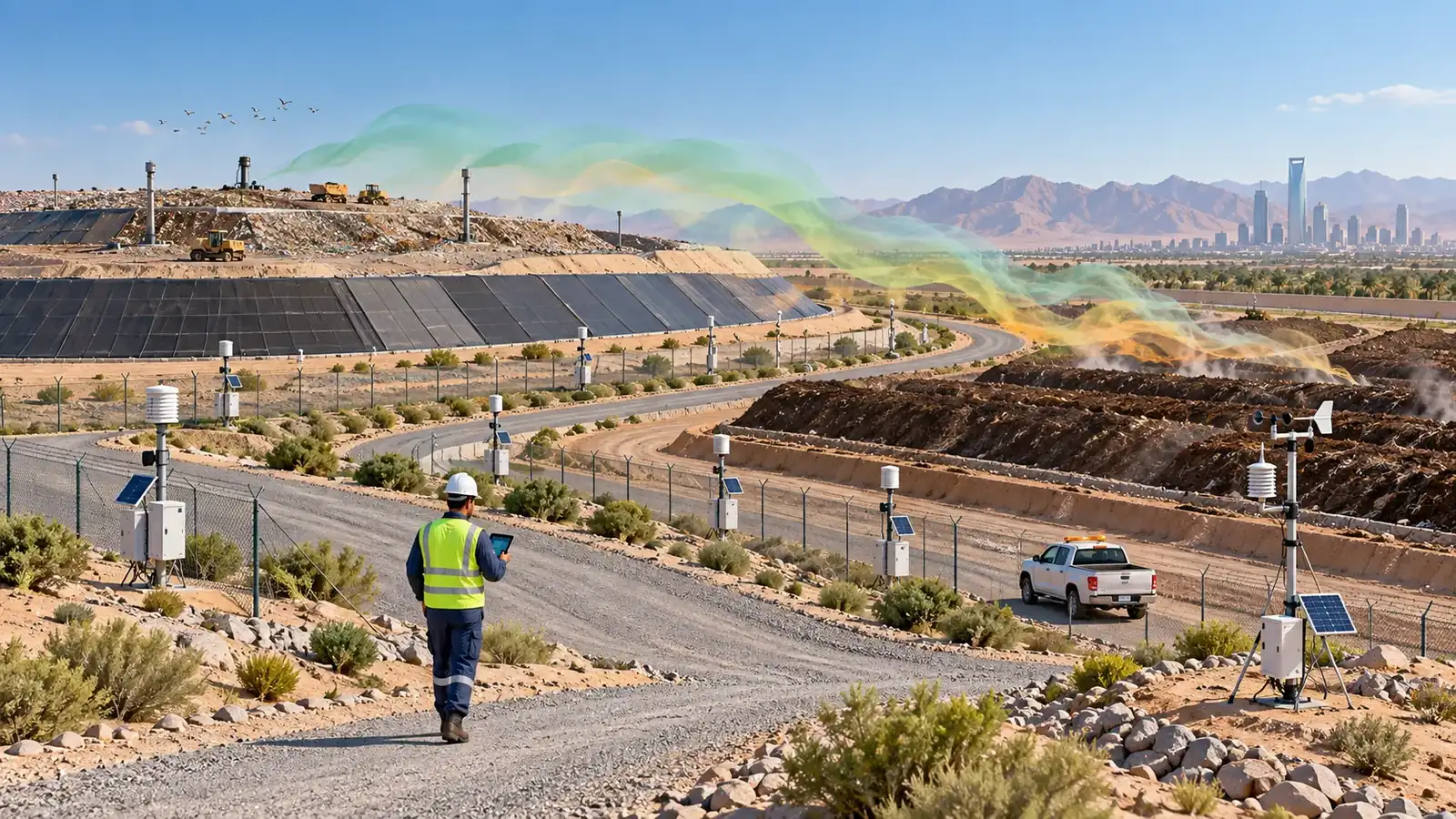
Odour monitoring for landfill and composting sites: weather and site events
Continuous stations can show when selected gas or VOC-indicator readings change. Portable surveys can compare accessible source and boundary points. Weather data—especially wind direction and speed—helps test whether a measured or reported event is physically consistent with a source area. Complaint records should include time, location, duration and description. They should not be automatically labelled justified or unjustified by one signal.
Operational logs provide the missing context. Record tipping location, exposed area, cover work, gas-well adjustment, flare status, leachate handling, compost turning, feedstock changes, equipment downtime, fire or hot-spot response and unusual loads. Time alignment matters more than collecting many disconnected variables. Odour complaint investigation and response planning establishes the intake, verification and escalation workflow.
Sensor results also have limitations. A methane instrument does not quantify odour concentration; a total-VOC response does not identify individual compounds; and a single downwind observation does not prove which site source contributed. When sensory or compound-specific evidence is required, samples and analysis are planned through odour source sampling strategy with a laboratory where applicable.
Test controls against measured change
Monitoring can evaluate whether a changed operating condition is followed by a repeatable change at the source or boundary. Examples include improved cover practice, repaired gas collection, leachate management, enclosure or extraction changes, biofilter operation and revised compost turning. A fair comparison needs similar source activity and weather, documented control status and sufficient repeated observations.
Measurement does not purify air or operate collection equipment. Gas-well tuning, flare operation, fire prevention, process changes and automation remain with the waste, process and controls professionals responsible for them. The monitoring scope defines indicators, alarms and escalation, within the site's safety and permit responsibilities.
Saudi delivery scope and project inputs
Saudi heat, dust, solar loading and long travel distances can affect equipment siting, power and servicing. Coastal humidity and salt exposure may matter in Jeddah or Eastern Province locations. Large sites may need a staged approach: desktop source mapping, an initial patrol, temporary monitoring at candidate areas, then fixed equipment only where the first evidence supports it.
Deliverables can include:
- a source and receptor register;
- proposed routes and stations, parameters and ranges;
- meteorological requirements and event/complaint templates;
- a communications plan, QA and maintenance schedule;
- an alarm matrix and findings format.
The report ranks likely operational checks and evidence gaps without making unsupported legal or source-attribution conclusions.
The plan also states which site conditions the monitoring period actually represents. Waste placement, rainfall, gas-field work, compost feedstock and seasonal weather can change over time. If the first campaign misses an important operating state, the report identifies that limitation and recommends the specific follow-up window rather than generalising the result.
This waste-site odour service is available for projects across Saudi Arabia, including Riyadh, Jeddah, Dammam and Jubail.
To start, provide the site and cell plans, waste and feedstock types, operating hours, gas and leachate systems, compost process, complaint history, control equipment, weather data, safety restrictions, power/connectivity and the operational decision required.
Frequently asked questions
Who provides odour monitoring for landfill and composting sites in Saudi Arabia?
Saudi Odour Monitoring provides landfill and compost odour monitoring planning, equipment and event-evidence review for waste-site operators across Saudi Arabia. Laboratory analysis is coordinated through a laboratory where applicable.
How do I choose the areas for odour monitoring at landfill and composting sites?
Candidate areas include the active face, cover operations, gas wells and headers, leachate systems, flare area, waste reception and older cells. The final list should reflect current activities, wind, complaint locations and safe access.
Can methane-monitoring equipment measure odour?
No. Methane is a major landfill-gas component and has safety and emissions significance, but it is not an odour-concentration measurement. Odour may involve trace compounds and human sensory response, requiring different evidence.
How should compost odour be investigated?
Separate reception, mixing, active processing, turning, curing, screening and storage events. Record feedstock, moisture or process changes, weather and control status, then compare observations or measurements across representative cycles.
Can monitoring verify an odour-control improvement?
It can support a before/after or inlet/outlet comparison when operating and weather conditions are documented. Monitoring shows evidence of change and does not replace process-engineering acceptance.
What affects the cost of waste-site odour monitoring?
Cost depends on site size, the number of monitoring stations, parameters and equipment, power and connectivity, the monitoring duration and any sampling or laboratory coordination. Configuration and lead time are confirmed in each quotation.
How long does waste-site odour monitoring take?
Timing depends on the site layout, staged scope, equipment configuration and the number of operating cycles to be observed. Lead time is confirmed in your quotation.
Saudi Odour Monitoring serves projects across Saudi Arabia, including Dammam, Al Khobar, Jubail, Riyadh, Jeddah, NEOM and Qiddiya.
For odour monitoring for landfill and composting sites, share your site plan and complaint history and request a quotation.