
Scentroid SL50 Odour Monitoring Station Saudi Arabia
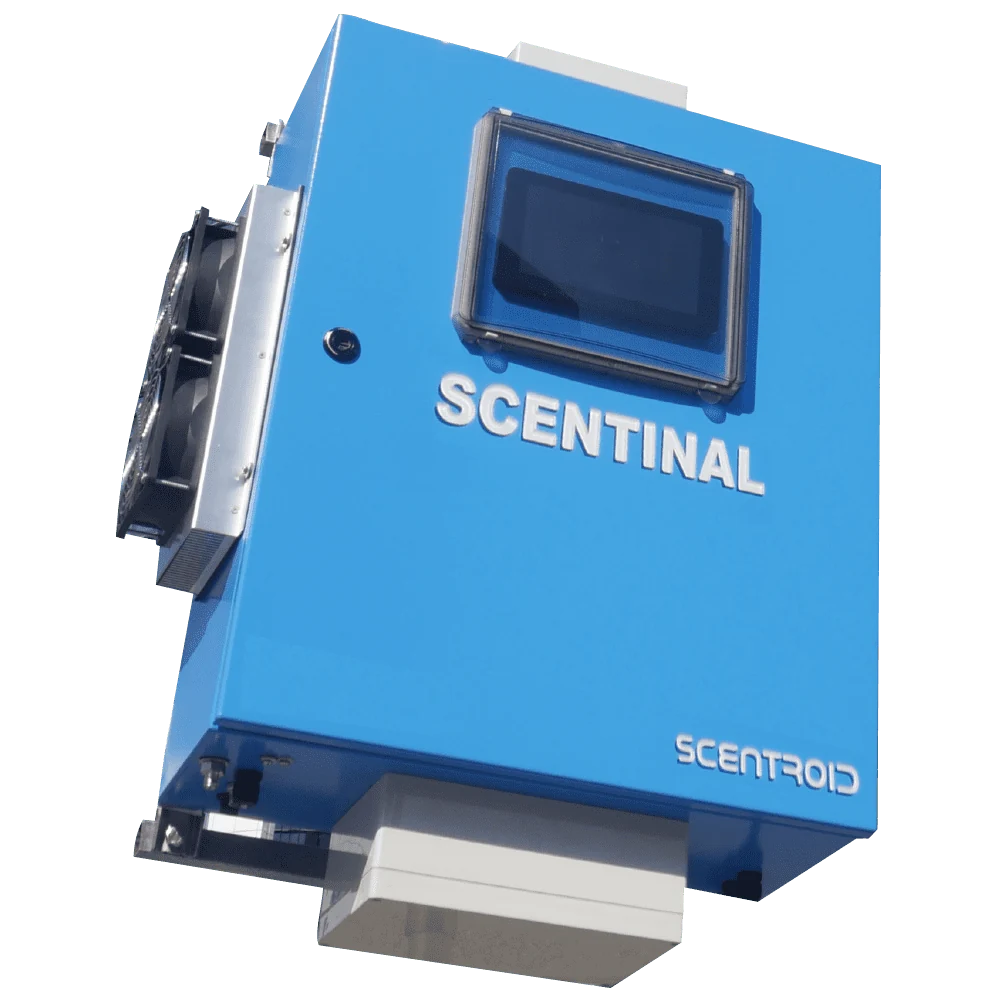
Saudi Odour Monitoring supplies the Scentroid SL50 Scentinal odour monitoring station in Saudi Arabia, a configurable fixed station that Scentroid positions for air-quality and odour monitoring. Saudi Odour Monitoring is an authorized Scentroid distributor and prepares the sensor, siting, communications, alarm and operating scope for Saudi projects; configuration, availability and lead time are confirmed in each quotation.
You receive a written proposal setting out the module configuration, siting, communications, scope, lead time and price. Request a quotation
The buying question is specific: can an SL50 configuration capture target-gas patterns and odour-related events at a source area, boundary or receptor? A station does not directly represent every odour mixture, prove a source or replace sensory olfactometry.
Configure the station around an odour hypothesis
Begin with the suspected sources, odour character, operating cycle, complaint pattern and likely indicator compounds. H2S may fit wastewater or sulfur-related applications; ammonia may be relevant to agriculture or selected processes; and a VOC sensor may support broader screening. Range, detection needs, cross-sensitivity, temperature, humidity and other gases determine whether a module can answer the question.
Scentroid’s current SL50 page states that the platform supports up to 20 sensing modules across PID, non-dispersive infrared, electrochemical, laser particulate and metal-oxide technologies. “Up to 20” is platform capacity, and each fitted module is chosen for a reason. The proposal lists the selected modules, ranges, units, interferences, calibration approach and reason for each measurement.
Current station features to confirm
The manufacturer lists:
- a one-minute sampling rate;
- one or two sampling ports and a wall-mounted NEMA 4X cabinet;
- 3G/4G and LAN communications by default, with Wi-Fi also shown;
- 64 GB storage, a seven-inch touchscreen, SIMS3 connection and an optional local server.
The exact modem, network bands, antenna, storage behaviour, software licence and hosting arrangement are confirmed for the ordered revision.
Manual calibration using calibration gas is listed, with an optional automatic built-in-gas arrangement. The operating plan still needs inspection, zero/span or other applicable checks, calibration-gas logistics, consumables, sensor replacement, records and fault response. Manufacturer capability does not eliminate site maintenance.
The page also lists SMS and email notifications and a local audible alarm. Alarm thresholds should be controlled project settings. A target-gas threshold, device fault, lost communications and overdue service are different events and may need different recipients and responses.
Put odour context around the sensor data
Target-gas data becomes more useful when it is time-aligned with source operations, wind and complaints. The station location should have a written role: near-source diagnostic, facility boundary, community-facing receptor or background/context point. Wind speed and direction can test whether a pathway is plausible. Event records can capture pump cycles, loading, tank activity, waste handling, control-equipment status or another source-specific operation.
For a full operating design, see continuous odour monitoring systems. Where complaints drive the need, use fenceline odour and community-impact monitoring to define complaint intake, weather and response roles.
Scentroid may provide software tools or modelled outputs relating measured pollutants to odour. Any calculated odour concentration or complaint classification needs site-specific inputs, traceable training/reference data, defined units, validation and expert review, and is distinct from a sensory olfactometry result or proof that a facility caused a complaint.
Scentroid SL50 monitoring: siting and lifecycle requirements
Saudi deployments may face high heat, solar loading, dust, coastal humidity or salt, remote connectivity and constrained safe access. The manufacturer’s sampling-condition and enclosure specifications are checked against the actual location and installation. A cabinet rating alone does not resolve shading, inlet design, mounting, hazardous-area classification, power quality or safe calibration access.
SL50 configuration, supply and support are available for projects across Saudi Arabia, with configuration confirmed in the quotation.
An odour-focused delivery package can include:
- the monitoring objective and source/receptor map;
- a module and range schedule and sampling arrangement;
- location and mounting requirements, power and communications plan, weather inputs;
- SIMS3/account scope and alarm matrix;
- commissioning tests, training, maintenance and a responsibility matrix.
Odour and VOC services can support the investigation design when the station is part of a wider workflow.
To request a configuration, provide suspected sources, target compounds and expected ranges, location purpose, site conditions, complaint or event history, available weather data, power/connectivity, hazardous-area status, alarm recipients, data users, maintenance resources and the decision the station must support.
Commissioning verifies more than connectivity. Check installed module identities, units, timestamps, inlet condition, local storage, dashboard tags, alarm routing, fault states and recovery after a planned communications interruption. The signed handover preserves configuration records, calibration status, user roles and responsible maintenance contacts.
Frequently asked questions
Who supplies the Scentroid SL50 odour monitoring station in Saudi Arabia?
Saudi Odour Monitoring supplies the SL50 Scentinal with the sensor, siting, communications and alarm scope for projects across Saudi Arabia. Configuration, availability and lead time are confirmed in each quotation.
Which odour-related parameters can the SL50 product include?
Available sensor technologies include PID, NDIR, electrochemical, laser particulate and metal oxide. Potential target gases depend on current modules. The final parameter combination and ranges are verified against the source and expected environment.
How does the SL50 send data and alarms?
Scentroid lists 3G/4G, LAN and Wi-Fi communication routes, SIMS3 connectivity, SMS/email notifications and a local audible alarm. Network, licence, recipients, thresholds and outage behaviour require project configuration.
Where can I buy and install an SL50 odour monitoring station?
Describe your sources, target gases, location role and site conditions, and request a quotation. Review wind, obstructions, inlet exposure, power, communications, hazardous-area requirements and maintenance access before fixing the location.
Can the station prove which source caused a complaint?
Not by itself. Station data can support an evidence chain with wind, operating events, field observations and competing-source review. Site-specific validation or formal modelling may be required for stronger attribution.
What affects the cost of an SL50 station?
Cost depends on the selected sensor modules, sampling ports, communications and software scope, mounting and power, calibration-gas arrangements, training and commissioning. Configuration and lead time are confirmed in each quotation.
How long does SL50 delivery and commissioning take?
Timing depends on the module configuration, site readiness, installation and commissioning scope, and manufacturer lead times. Lead time is confirmed in your quotation.
Saudi Odour Monitoring serves projects across Saudi Arabia, including Dammam, Al Khobar, Jubail, Riyadh, Jeddah, NEOM and Qiddiya.
For the Scentroid SL50 odour monitoring station in Saudi Arabia, share your sources, target gases and site conditions and request a quotation.