
Choosing an Odour Sampling Method for Stacks, Tanks and Area Sources
Saudi Odour Monitoring supports odour sampling method selection in Saudi Arabia for stacks, tanks and area sources, because an odour bag is only as representative as the method used to fill it. A hot pressurised stack, a tank headspace, an aerated basin and a passive compost surface require different sampling arrangements. Choosing by whichever sampler is available can change the sample, miss the emitting surface or create an unsafe task.
The right method starts with the source type, temperature, moisture, pressure, variability and intended analysis. You receive a written proposal setting out the scope, equipment, lead time and price. Request a quotation
Equipment supply does not replace the method selection, permit or field sampling that appropriately qualified specialists and the receiving laboratory review or deliver.
Start with the result you need
Define whether the sample will be used for dynamic olfactometry, a named VOC or sulfur analysis, a screening comparison or another method. The target determines bag or media compatibility, sample volume, flow, blanks, holding time and transport. A bag suitable for one sensory method may not preserve every chemical for speciation.
Ask the laboratory for written acceptance requirements before mobilisation. Record the method edition, reporting units, required field data and whether dilution must be included in the final calculation. If both sensory and chemical analysis are needed, separate samples or sampling trains may be required.
Stacks and ducts: manage heat, moisture and access
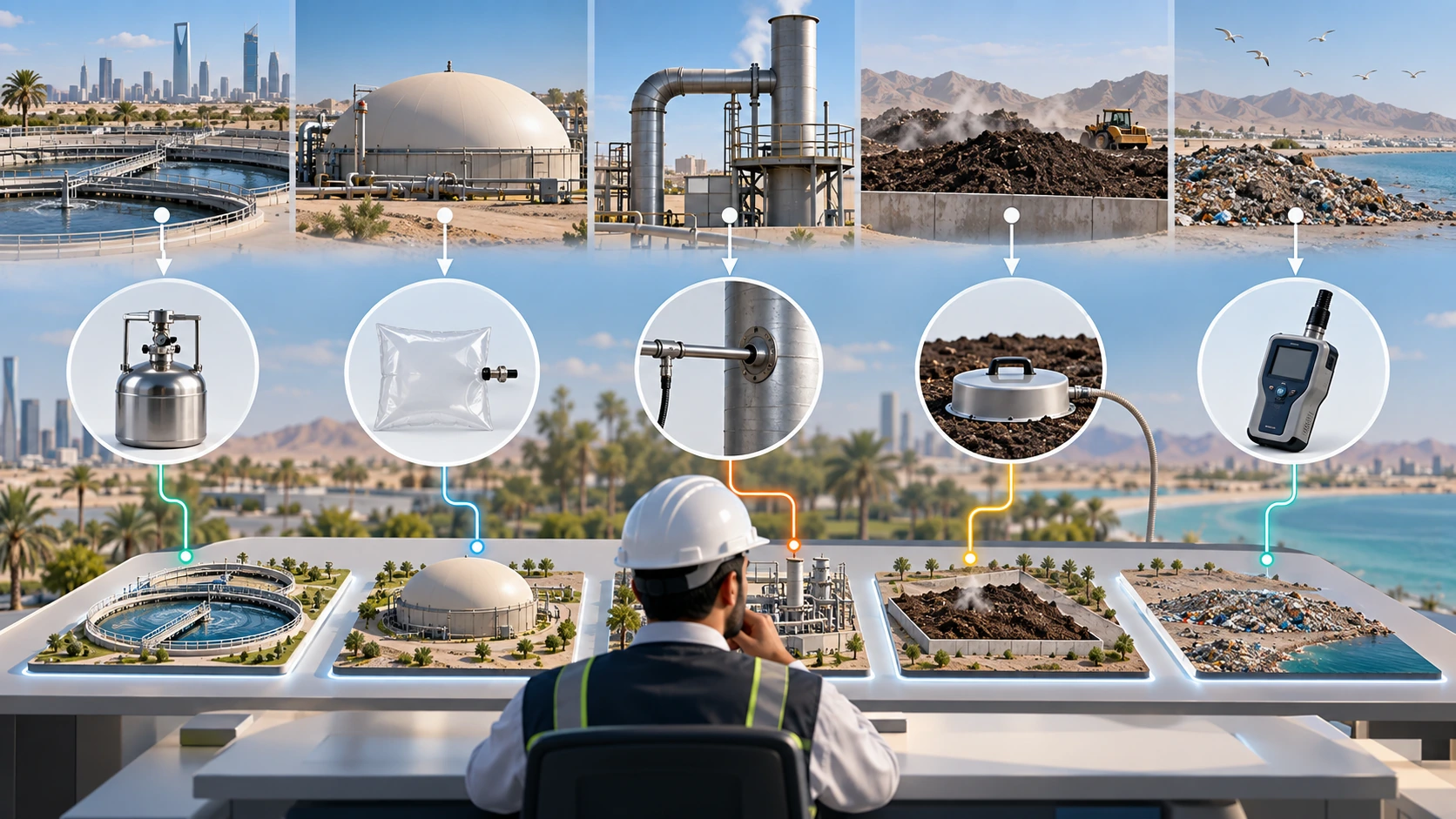
A cool, dry duct may allow direct collection under the selected method. A hot, wet stack can produce condensation as the gas cools in tubing or a bag; condensate may absorb odour-active components and change the sample. A heated line or in-probe dilution with dry nitrogen or zero air may be needed. The Scentroid DS5 is one hardware example that provides selectable pre-dilution in a heated probe.
The team must document stack temperature, pressure, velocity or flow context, port arrangement, probe position, leak checks, dilution ratio and clean-gas quality. Access platforms, hot surfaces, pressure and process hazards require the asset owner’s permit and safety controls. A portable sampler does not make an unsuitable port safe.
Tanks and headspaces: define the boundary
“Tank sample” may mean vapour from a closed headspace, a vent outlet, the air above an open tank or emissions leaving during filling. These are different boundaries. Pressure, oxygen, flammability, corrosivity and hazardous-area classification must be reviewed before connecting equipment or opening a port.
A headspace grab can characterise gas at the approved point and time, but it may not directly represent the emission rate to atmosphere. Vent flows and operating stage matter. Use compatible wetted materials and avoid drawing through a pump that could contaminate the sample. A vacuum chamber such as the Scentroid VC20 fills a bag by lowering pressure around it so the sample does not pass through the chamber pump.
Liquid and solid area sources
Wastewater basins, lagoons, sludge, compost, soil and waste surfaces do not discharge through one defined stack. A flux chamber isolates a known area and introduces sweep air before sample extraction. A ventilated wind tunnel passes controlled air over a surface. These methods disturb the source differently and use different calculation bases.
The Scentroid SF450 is a stainless-steel flux chamber designed for solid and liquid surfaces, including flotation on liquids. The SW60 is a ventilated wind-tunnel sampler for passive solid or liquid surfaces with controlled air speed. Neither device automatically makes one point representative. The sampling plan should define strata, locations, replicates, operating conditions and whether active aeration changes the method.
Ambient and receptor sampling
An ambient bag can capture air during a complaint, boundary event or field observation for later sensory analysis, if the method and laboratory accept it. Timing is critical because a plume can shift during bag filling. Record the exact location, height, start and finish, wind, nearby activities, odour observation and any portable readings.
Include an appropriate field blank and avoid vehicle exhaust, perfumes, solvents and contaminated gloves or tubing. The absence of detectable odour in a later bag does not prove that no event occurred; the plume may have moved or the sample may have changed during storage.
Protect the sample chain
Condition equipment and bags as required, use compatible tubing, check flow and leaks, and label every sample immediately. Record sampler ID, bag material, source, point, times, temperature, pressure, sweep or dilution flows, dilution ratio, operator and deviations. Protect bags from heat, sunlight, puncture and cross-contamination during transport.
Holding time is method- and analyte-specific. Do not invent a universal number. Schedule the laboratory before fieldwork and document receipt. The Scentroid odour sampling equipment page compares hardware; the odour source sampling strategy route is the commercial planning path when method and locations require partner review.
Odour sampling method selection in Saudi Arabia: prepare a brief
Provide source drawings, operating states, expected compounds, temperatures, pressures, access and hazardous-area information, intended analyses, laboratory instructions, sample counts, QA samples and reporting needs. Identify who owns permits, safety, field collection, transport and analysis. For sensory results, coordinate with dynamic olfactometry and odour panel support.
Frequently asked questions
How do I choose an odour sampling method for a stack or a pond in Saudi Arabia?
The same method usually cannot be used for both. Point sources and area surfaces have different flow boundaries, sampling hardware and calculation requirements.
Why is hot-stack dilution used?
Controlled dilution with dry clean gas can reduce condensation as a hot, moist sample cools. The dilution ratio must be measured and carried into the result.
Is a tank headspace sample an emission-rate measurement?
Not by itself. Headspace concentration and release to atmosphere are different quantities; vent flow and operating conditions also matter.
Does buying sampling equipment include field collection?
No. Hardware supply, sampling design, site mobilisation, safe source access, collection and laboratory analysis are separate scopes that must be confirmed.
Who provides odour sampling method selection support in Saudi Arabia?
Saudi Odour Monitoring supports sampling-method selection and supplies sampling equipment for projects across Saudi Arabia.
What affects the cost of odour sampling?
The source types, sampling hardware and accessories, sample counts, QA samples, laboratory requirements and site access. The price is set out in your quotation.
How long does it take to arrange odour sampling equipment?
It depends on the sampler and accessories selected and the laboratory schedule, and is confirmed in the quotation.
Saudi Odour Monitoring serves projects across Saudi Arabia, including Dammam, Al Khobar, Jubail, Riyadh, Jeddah, NEOM and Qiddiya.
For odour sampling method selection in Saudi Arabia, send your source types and intended analyses. Request a quotation