
Scentroid SS600 Olfactometer Supplier Saudi Arabia
Saudi Odour Monitoring is an SS600 olfactometer supplier in Saudi Arabia, providing the Scentroid SS600, stationary dynamic-olfactometry equipment for presenting diluted odour samples to human panellists under a controlled test sequence. It is relevant to organisations considering an in-house odour laboratory or upgrading an existing sensory facility. Buying the equipment is only one part of that decision: the room, clean-air supply, sample workflow, panel selection, quality system, trained staff and applicable method all determine whether results are fit for their intended use.
We scope the supply of SS600 equipment and its associated requirements. You receive a written proposal setting out the configuration, scope, lead time and price. Request a quotation
Equipment supply does not replace laboratory accreditation, method selection or the design and safety decisions of the responsible professionals.
SS600 olfactometer supplier in Saudi Arabia: what the manufacturer documents
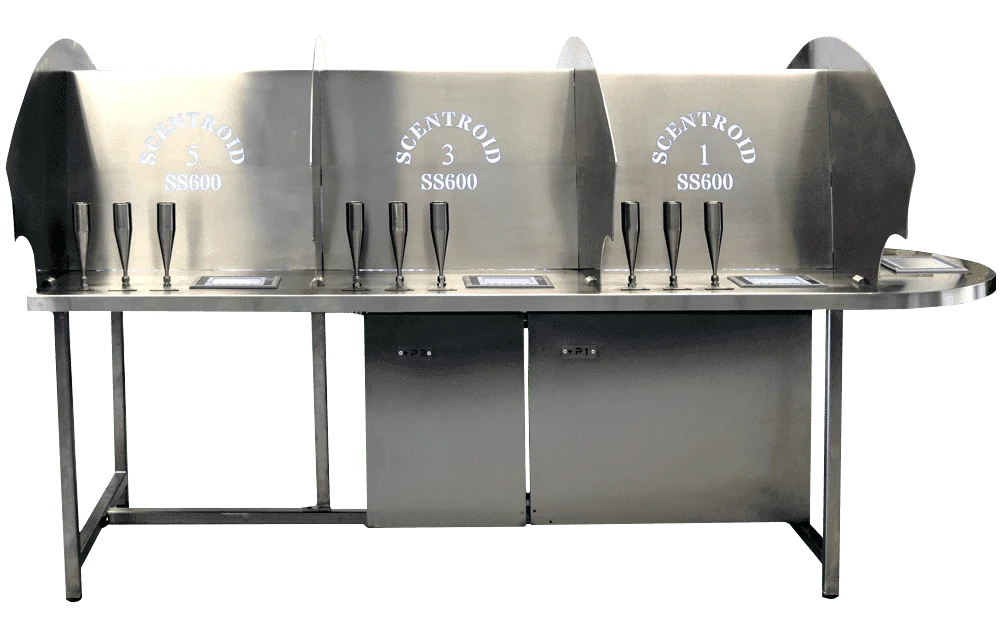
Scentroid describes the SS600 as an automated stationary olfactometer with six olfactory stations. Its product page lists three-port triangular forced-choice, binary, yes/no, hedonic-tone and direct-presentation test modes. It also identifies mass-flow controllers for sample and dilution air, stainless-steel wetted surfaces, automated purging and a machine-control interface.
The manufacturer lists EN 13725:2022, ASTM E679 and several other standards in connection with the instrument. That establishes the equipment’s intended method support; not every test mode belongs to the same standard. The governing method, edition, client requirement and accreditation scope must be specified independently.
Dynamic olfactometry needs more than an olfactometer
In a threshold test, odorous sample air is diluted with neutral air and presented to selected panellists under a defined sequence. The analysis determines an odour-detection threshold and reports concentration according to the chosen standard. It does not identify the individual chemicals creating the odour. Compound-specific questions require a separate analytical method and a qualified laboratory scope.
The facility needs a stable, low-odour test environment; suitable ventilation and exhaust; clean dilution air; sample storage and handling controls; secure gas-cylinder arrangements where required; and separation between sample preparation and panellist areas. Layout should prevent ambient or sample odour from contaminating the test space. Saudi HVAC design must manage outside dust, heat and humidity without introducing background odours from filters, drains, finishes or adjacent activities.
Panel and quality-system responsibilities
Human responses are part of the measurement, so panellist screening, selection, training and ongoing performance checks are central. The laboratory also needs controlled procedures for sample receipt, identification, holding time, presentation order, blanks, reference materials, equipment checks, calculations, review and reporting. Software automation cannot replace these responsibilities.
An accreditation body assesses a laboratory’s management system, technical competence, staff, method implementation and scope—not simply the brand of equipment installed. Buyers seeking reportable or contractually recognised results should engage an accreditation and method specialist early. The dynamic olfactometry and odour panel support route covers coordination boundaries when analysis will be performed externally rather than in-house.
Define the system and room interfaces
The equipment schedule should identify the selected test modes, panellist positions, clean-air generation or supply, sample connections, exhaust route, control workstation, utilities, calibration and verification tools, consumables and spares. Confirm which components are included with the current SS600 quotation and which are part of the laboratory fit-out.
Room design must address electrical load, ventilation balance, noise, cleanable finishes, personnel flow, sample receipt and cylinder safety. The responsible MEP, safety and laboratory-design professionals retain those decisions. Saudi Odour Monitoring supplies the equipment and coordinates its scope.
Plan commissioning and ongoing operation
Commissioning should verify installation, airflow and utilities; dilution performance; blank response; software and data capture; purge behaviour; test sequences; and operator training. A method specialist should define acceptance criteria. Records should connect each run to samples, panellists, equipment status, dilution checks and any deviations.
It is useful to separate installation qualification from operational and method performance. Confirm first that the supplied components and utilities match the approved design, then test that the installed system performs through its intended ranges before routine sample work begins.
Ongoing work includes cleaning, preventive maintenance, verification, reference testing, panel management, consumable control and proficiency activities appropriate to the chosen method. Sample collection also needs a controlled chain. The Scentroid odour sampling equipment page compares the hardware used for different source types, while odour source sampling strategy addresses planning and delivery arrangements.
Prepare an SS600 enquiry
State whether the project is a new laboratory or retrofit, the required method and edition, intended accreditation objective, expected sample types and throughput, selected presentation modes, available room and utilities, clean-air approach, data and reporting needs, training requirement, destination and commissioning responsibilities. Request a component-by-component inclusions schedule rather than assuming that “odour laboratory” means a turnkey accredited facility.
Frequently asked questions
Is the SS600 a complete accredited laboratory?
No. It is laboratory equipment. Accreditation applies to the laboratory’s defined scope, competence, methods and quality system after assessment by the relevant accreditation body.
How many panellist stations does the SS600 have, and which test modes are documented?
Scentroid presents the SS600 as a six-station system, and the manufacturer lists three-port triangular forced-choice, binary, yes/no, hedonic-tone and direct-presentation modes. The supplied layout and included components are confirmed in the quotation; applicability of each mode depends on the chosen method.
Does the SS600 identify odour chemicals?
No. Dynamic olfactometry measures sensory response to a diluted sample. Chemical identification or speciation requires separate analytical techniques and laboratory work.
Can the equipment be installed in an ordinary office room?
A proper assessment is needed. Background odour, ventilation, clean air, exhaust, utilities, finishes, sample handling and panellist conditions can all affect laboratory performance.
Who provides SS600 olfactometer equipment in Saudi Arabia?
Saudi Odour Monitoring supplies the Scentroid SS600 for projects in Saudi Arabia, with the inclusions schedule confirmed component by component in the quotation.
What affects the cost of an SS600 olfactometer?
The test modes and panellist positions, clean-air arrangement, included components and spares, training and commissioning scope, and destination. The price is set out in your quotation.
How long does SS600 delivery take?
Lead time depends on the configuration and included components, and is confirmed in the quotation.
Saudi Odour Monitoring serves projects across Saudi Arabia, including Dammam, Al Khobar, Jubail, Riyadh, Jeddah, NEOM and Qiddiya.
To buy an SS600 olfactometer from a supplier in Saudi Arabia, send your method, room and throughput requirements. Request a quotation