
Dynamic Olfactometry and the Role of a Qualified Odour Laboratory
To measure odour concentration in Saudi Arabia, a laboratory uses a sensory method that determines how strong a gaseous sample smells by presenting controlled dilutions to selected human assessors. It answers a different question from chemical analysis. The result describes the collective detection response under the specified method; it does not identify every compound, explain toxicity or reproduce the experience of every person in the community.
Saudi Odour Monitoring provides odour source sampling strategy and dynamic olfactometry coordination for projects across Saudi Arabia. You receive a written proposal setting out the scope, lead time and price. Request a quotation
For a Saudi wastewater, waste, food, industrial or control-performance project, the value of the result depends on the full chain: the sampling objective, source condition, equipment, sample handling, panel procedure, quality system and report. A sophisticated olfactometer cannot recover a sample that was taken from the wrong place or held under unsuitable conditions.
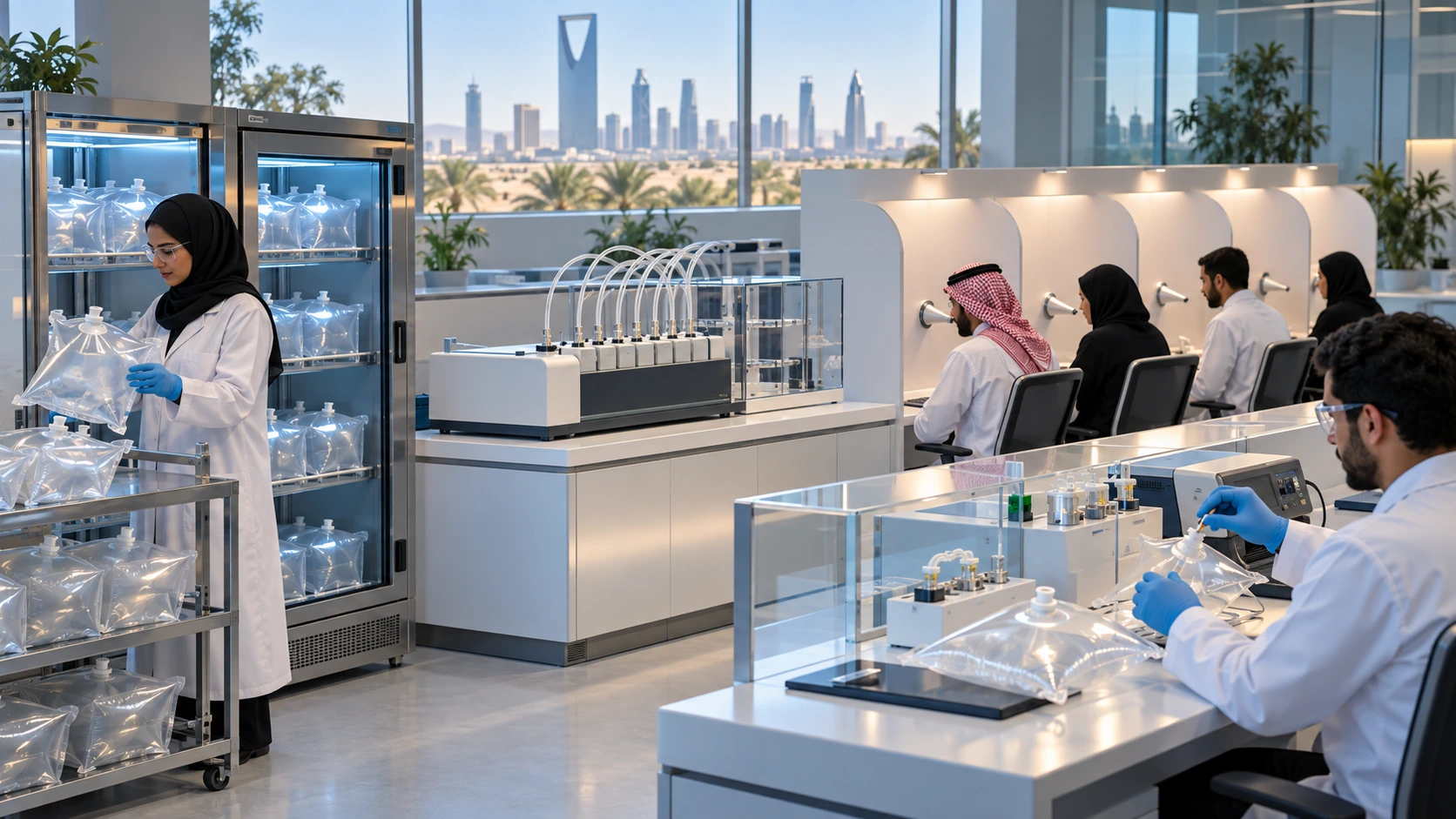
What the result can—and cannot—tell you
The reported odour concentration represents how much controlled dilution is required to reach the method’s detection endpoint for the panel. Results are commonly expressed in odour units per cubic metre under the applicable standard. The laboratory should state the method, sample identity, condition, analysis timing, result and relevant quality information.
Dynamic olfactometry can compare source samples, provide an input to an odour-emission calculation or help assess inlet and outlet conditions around a control system. It does not directly report odour intensity at a community location, hedonic tone, chemical composition or health risk. Those questions need separate sensory, instrumental, analytical or health methods.
The dynamic olfactometry and odour panel support service is the coordination route. Testing and formal results come from a qualified odour laboratory whose current competence and scope are confirmed for the required method.
Sampling is part of the measurement
Before fieldwork, define the source and operating state to be represented. A stack, vent, tank headspace, area source, liquid surface or building outlet may require different sampling equipment and technique. Record production rate, control-system status, temperature, moisture and any variable process conditions that affect representativeness.
Use suitable, clean sampling components and bags or containers compatible with the method and sample. The plan should address purging, blanks, duplicates where required, sample volume, condensation risk, labelling, chain of custody, transport and maximum holding time. These details should be agreed with the laboratory before collection rather than improvised onsite.
Sampling personnel need the correct training and safe access arrangements. A sample can be validly analysed yet fail to represent the intended source, so the report should keep sampling responsibility and laboratory responsibility visible. The odour source sampling strategy service coordinates source-specific planning with the laboratory.
Why the sensory panel is controlled
People vary in sensitivity, and an individual’s response can change. A recognised dynamic-olfactometry method therefore uses selection, screening and operating rules for assessors rather than inviting an arbitrary group to smell samples. The laboratory controls dilution presentation, panel conditions, equipment checks, reference materials and result calculation under its method.
The panel is an analytical component, not a focus group. Assessors should not be asked to decide whether a facility is compliant or identify a source from contextual clues. Blinding and controlled presentation reduce bias. Health and safety screening, exclusion criteria and exposure controls belong to the laboratory’s approved procedures.
How to measure odour concentration: choosing a qualified laboratory
Ask which current standard and edition the laboratory uses, whether its accreditation or recognised competence covers dynamic olfactometry, and where the analysis will occur. Review the scope certificate and accreditation-body listing rather than relying on a logo or a general claim that the organisation is “certified.” ISO/IEC 17025 addresses laboratory competence, but the specific accredited scope matters.
Confirm sample receipt hours, holding-time policy, transport instructions, capacity, reporting units, uncertainty or quality statements, subcontracting and treatment of invalid samples. Name the parties responsible for sampling, courier coordination, analysis, technical review and interpretation. Saudi Odour Monitoring coordinates the laboratory work; the analysis itself is performed by the laboratory.
The Scentroid SM100i intelligent olfactometer is a product route for reviewing a current dynamic-olfactometry instrument. Owning equipment does not confer laboratory accreditation, panel competence or method approval.
Use results in the right decision
For source comparison, keep operating conditions comparable and collect enough samples to represent variability. For control performance, agree whether inlet and outlet sampling can be performed simultaneously or under matched conditions and how efficiency will be calculated. For modelling, coordinate source geometry, flow and odour-concentration inputs with the modeller.
Reports should preserve sample IDs, times, source state, deviations and limitations. A single sample is a snapshot; it should not be presented as a permanent source value without evidence. Chemical speciation may be added when compound identity matters, but the chemical and sensory results should not be treated as interchangeable.
Frequently asked questions
What does dynamic olfactometry measure, and is an odour unit a toxicity measure?
Dynamic olfactometry determines the odour concentration of a gaseous sample through controlled dilution and responses from selected human assessors under a defined method. An odour unit describes sensory detection, not toxicity or chemical identity; health-risk questions require chemical identity, concentration, exposure and an appropriate assessment framework.
Who provides dynamic olfactometry in Saudi Arabia?
Saudi Odour Monitoring provides the coordination: source sampling strategy, laboratory liaison and reporting requirements. Analysis is performed by a qualified odour laboratory.
What affects the cost of dynamic olfactometry?
Cost depends on the number and type of sources, sampling method and equipment, sample transport, the laboratory's scope and the reporting required. Your quotation sets these out.
How long does dynamic olfactometry take?
Timing depends on sampling access, transport to the laboratory, holding-time limits, laboratory capacity and reporting requirements. Lead time is confirmed in each quotation.
How do I measure odour concentration, and how do I choose a laboratory in Saudi Arabia?
Confirm the laboratory's current scope, then plan with it: it can specify compatible equipment, sample volume, handling, transport and holding-time conditions. Planning also ensures that the source state and sample will answer the intended question.
What should be checked on a laboratory accreditation?
Check the issuing accreditation body, current status, laboratory location, referenced standard and exact scope covering the requested test. A generic ISO/IEC 17025 claim is not enough.
Can an onsite olfactometer replace a qualified laboratory?
Equipment alone does not provide an accredited method, selected panel, quality system or competent reporting. Project requirements determine whether field screening or qualified laboratory analysis is appropriate.
Saudi Odour Monitoring serves projects across Saudi Arabia, including Dammam, Al Khobar, Jubail, Riyadh, Jeddah, NEOM and Qiddiya.
To arrange how to measure odour concentration for your project, Request a quotation.